

Ariadne
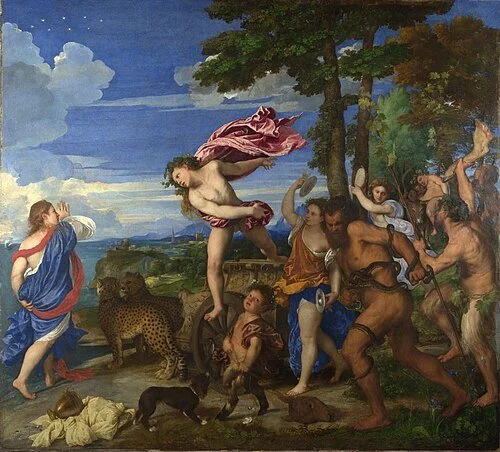
Ariadne: Immortal daughter of King Minos and Pasiphae, granddaughter of Titan God Helios
Minos: King of Crete, son of Zeus and Europa
Pasiphae: Witch and immortal daughter of Titan sun God Helios
Poseidon: God of the sea, earthquakes, and horses
Minotaur: Cursed son of Pasiphae, half man and half bull
Daedalus: Skilful architect and craftsman, seen as a symbol of wisdom, knowledge and power.
Theseus: Hero and King of Athens
Dionysus: God of the grape-harvest, fruitfulness, winemaking and wine, ecstasy, festivity and theatre
This tale begins upon the island of Crete, for Ariadne was daughter of the King Minos and Pasiphae. Ariadne would have many siblings most notably Androgeus and Deucalion. She grew up up in opulence and luxury, though Minos’ reign was brutal she avoided much of his cruelty, living an isolated life. She spent much of her day dancing.
Ariadne’s story wasn’t put into motion until her Father angered Poseidon, as punishment the god condemned his wife Pasiphae to fall in love and seduce a sacred bull. As a result of this alarming encounter she fell pregnant. Thus the Minotaur was born, named after his stepfather, perhaps to take back control of the narrative, he began to use the Minotaur to further his glory. Minos commissioned the legendary artificer Daedalus to design and build an elaborate labyrinth under the city to contain his prized son.
The Minotaur however was ever bloodthirsty. In the beginning the beast was fed the criminals of Crete, after some time there were no more criminals left on the small island to feed the monster. As a display of dominance over the city state of Athens, King Minos demanded tribute to be sent from Athens. This tribute came in the form of human sacrifice in the form of 7 youths, to be lead into the labyrinth to satiate the Minotaurs thirst for human flesh.
One day, in a batch of sacrificial tributes the Athenian prince Theseus arrived upon Crete. Ariadne spotted the handsome young man from a distance and fell irrevocably in love at first sight.
Late one night she approached Theseus and promised to help him overcome the Minotaur, she could not allow her love to die at the hands of her brother. It was then that Theseus revealed this has been his plan all along. He wouldn’t let another young Athenian die as a sacralise to the beast. He swore and oath to Ariadne promising he would marry her, and take her back to Athens. Ariadne gave Theseus a ball of thread to help the hero navigate his way back out of the labyrinth, he was to tie one end to the entrance and carry the thread with him as he hunted the beast. Later that night Daedalus gave Ariadne the key to the entrance labyrinth, so she could place Theseus a sword ready for the next day.
The next day Theseus defeated the Minotaur and snuck out of the labyrinth with all of the other Athenian tributes. He gathered up Ariadne from Crete on a ship that was awaiting his victory just offshore.
Though the journey from Crete to Athens was a long one, Theseus’ ship stoped off at the island of Naxos to rest for the night. Little did Ariadne know that she would wake up the next morning to find Theseus gone. He had abandoned in her slumber. Forced to sit on the beach and watch his ship sail away, Ariadne fell into complete despair. Not only had she been abandoned by the man she loved, the man whom she had saved, ostracising herself from her family and homeland, she was also going to starve to death.
Theseus might have been worried about the possible reaction of the Athenians if he were to bring back a Cretan, and daughter of Minos, to be their future queen. Or perhaps Theseus was worried about trusting a woman who was all too willing to betray her own father. Nevertheless he had left Ariadne for dead.
Luckily for Ariadne the island actually belonged to the Olympian God Dionysus. Who arrived on the island shortly after Theseus had left. Ariadne’s beauty, wit and grace captured the Gods attention and the two fell in love.
Ariadne and Dionysus would wed, and as was the norm the bride received gifts from other deities, amongst the most notable of these gifts was the Crown of Ariadne, a gift from Aphrodite and the Horai. The likeness of the crown would be placed amongst the stars as the constellation Corona. They had two children together, Staphylus and Oenopion. It was said that Zeus granted Ariadne immortality, thus the daughter of King Minos lived for ever, never aging a day.